
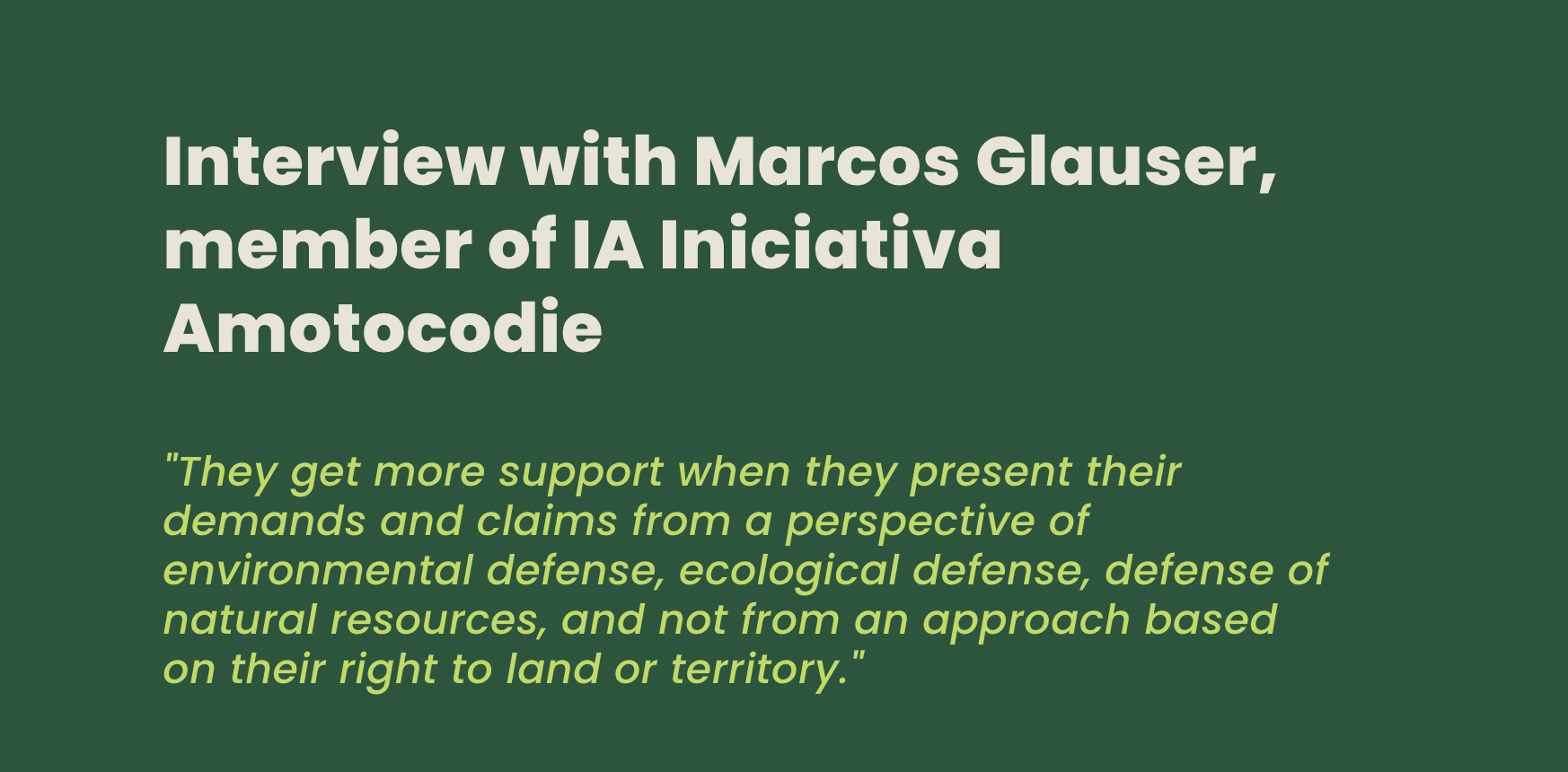


In partnership with GTI-PIACI (the International Working Group for Indigenous Peoples in Isolation and Initial Contact), the Solutions Insights Lab set out to understand what is working to protect the rights and territories of Indigenous Peoples in Isolation and Initial Contact (PIACI), and what it would take for those approaches to succeed elsewhere.
Isolated Indigenous peoples are groups of people who live without sustained contact with the broader society and, by choice, due to historical negative circumstances, maintain no relation with society and flee to the deepest parts of tropical forests. They exercise their right to self-determination by safeguarding their ways of life, culture, and territories, which must be protected given their extreme vulnerability to diseases, external pressures, and human rights violations.
Drawing on interviews with 29 Indigenous leaders, advocates, researchers, and practitioners across South America and Asia (Brazil, Peru, Ecuador, Paraguay, Bolivia, Colombia, Venezuela, Suriname, and Indonesia), we explored a series of questions aimed at strengthening their protection:
• What strategies are producing meaningful results?
• What conditions enable success?
• What barriers most constrain the field?
• How can knowledge developed in one region inform efforts in another?
• And what is needed to strengthen collaboration, build a shared understanding of PIACI, and advance recognition of PIACI as a global human rights issue?
The protection of PIACI territories is increasingly being recognized as central to climate and biodiversity goals. Their existence is a manifestation of human will and resistance to colonialism. They are not simply beneficiaries of conservation; they help sustain some of the most intact forest ecosystems in their regions. As evidence grows that stronger Indigenous land rights are associated with lower deforestation, healthier ecosystems, and stronger biodiversity outcomes, protecting PIACI territories is gaining recognition as both a human rights and environmental priority.
Across interviews, a clear picture emerged: protecting PIACI requires more than a single strategy. Effective approaches combine territorial protection, Indigenous leadership, community governance, legal advocacy, international collaboration, and new forms of accountability. While the political, legal, and cultural contexts vary significantly across countries, many of the same patterns surfaced repeatedly. The six themes below capture some of the most consistent lessons shared by practitioners across regions, and some of the most promising opportunities for strengthening PIACI protection moving forward.
• Recognition and territorial protection is the foundation of PIACI survival. In Colombia, years of community monitoring contributed to the designation of nearly one million hectares as an intangible zone for isolated peoples in and around Río Puré National Natural Park.
• Climate and conservation goals are converging with PIACI protection — but also generating new threats. At COP30, PIACI rights were explicitly recognized within the just transition framework for the first time; meanwhile, nickel mining for electric-vehicle batteries is expanding rapidly into O'Hongana Manyawa territory in Indonesia, driven by the same green energy transition.
• Neighboring communities are the primary line of protection. In Venezuela, where no state framework exists, Indigenous communities have built their own protection mechanisms grounded in Indigenous law, including self-demarcation, territorial guardians, and community mapping of sacred sites.
• International alliances require shared understanding, not just shared goals. The January 2026 exchange in Jakarta — the first cross-regional convening of South American and Indonesian practitioners — surfaced important definitional differences, including that many Indigenous peoples don't use the term "isolated" at all, reinforcing that frameworks must remain flexible.
• Indigenous organizations are building their own institutional infrastructure to lead this work. COIAB in Brazil established the first formal PIACI-focused body within an Indigenous organization in the country, marking a shift from the issue being treated as the exclusive domain of the state and FUNAI.
• Supply-chain accountability is creating leverage where political advocacy cannot reach. Earthsight's "Grand Theft Chaco" investigation traced Paraguayan leather from illegally deforested Ayoreo territory through Italian tanneries into European car supply chains, and was later cited in European parliamentary debates on the EU Deforestation Regulation.
During London Climate Week, meet and connect with the Indigenous Peoples, artists, and activists protecting Indigenous Peoples in Isolation and Initial Contact (PIACI) in South America.
When it comes to social change,
start with what's working.
©2026 Solutions Journalism Network (Solutions Insights Lab)
Terms of Use | Privacy Policy | Newsletter Archive | Report Website Issue

